What I build
Voice and writing profile.
Most people using AI to write sound like everyone else using AI to write. The same hedging, the same structure, the same corporate warmth. A voice profile fixes that. I study how you actually communicate, build a reference your tools can follow, and calibrate until the output sounds like you on a good day.
The problem
AI flattens everyone into the same voice.
You use AI to draft an email, and it sounds like a press release. You ask it to write a message to a parent, and it sounds like HR. The words are correct but the person is missing. You read it back and something feels off (you can usually tell within the first sentence), not wrong exactly, just flat. Generic. Interchangeable with anything anyone else would have written.
Your team cannot tell if you wrote it or the AI did, and not in a good way. The tone is polished but hollow. The structure is safe but predictable. Every message has the same rhythm, the same hedging, the same "I hope this finds you well" energy. The tool is fast, but the output does not sound like you. So you rewrite half of it anyway, and the speed advantage disappears.
What it looks like
The system that builds and refines your voice.
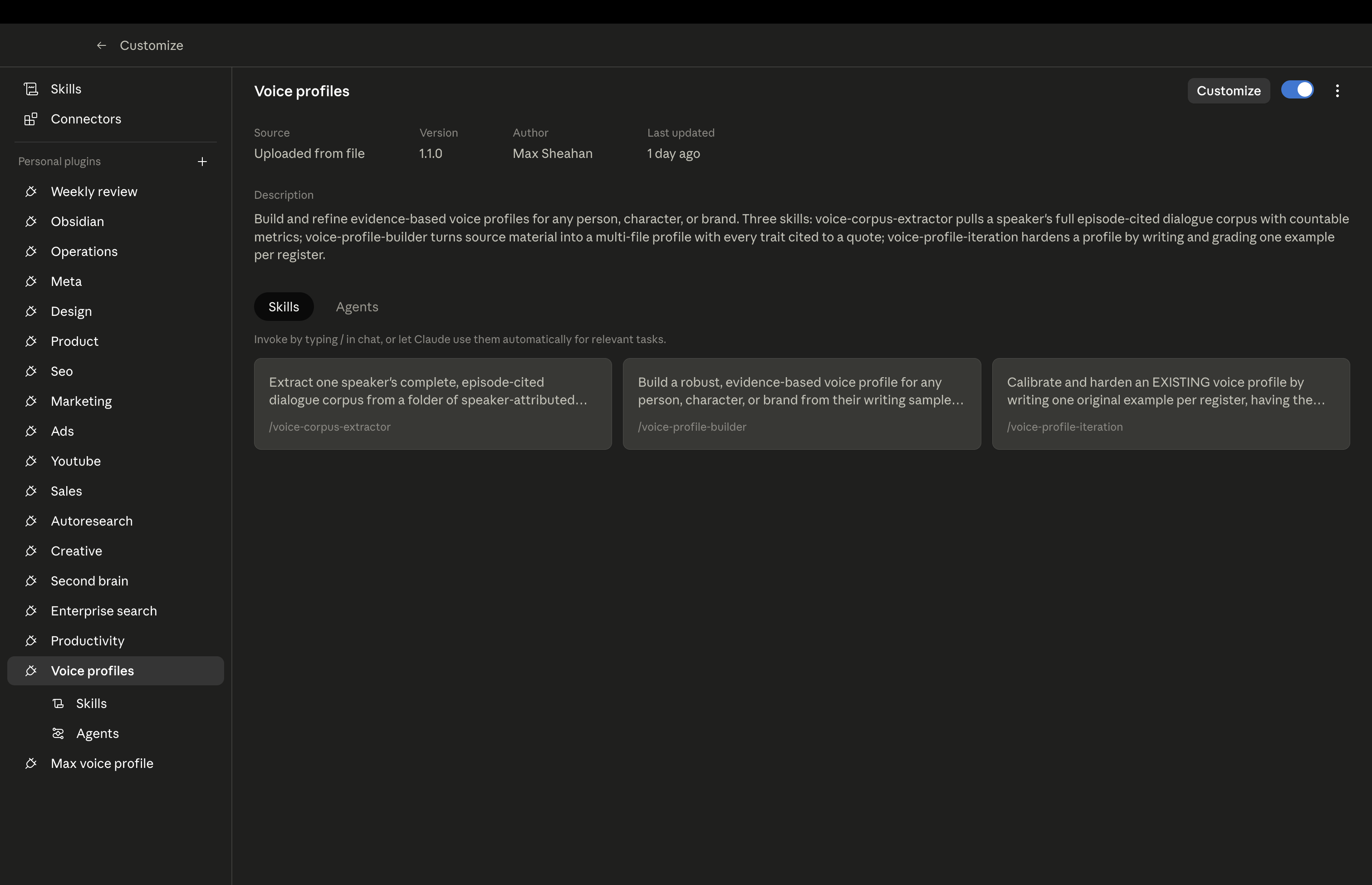
What goes into a voice profile
The layers that make you sound like you.
Sentence patterns
How you actually structure thoughts. Short declarative sentences? Compound structures? Where you put the qualifier matters, and the profile maps all of it so the AI follows your rhythm instead of guessing.
Register range
Formal with the board, direct with the team, warm with parents. The profile captures all registers, not just one. The AI matches its tone to the audience the same way you do.
Anti-patterns
What you never say. The corporate phrases, the hedges, the structures that make you wince when you read them back. The profile blocks these explicitly so the AI stops defaulting to them.
Calibration loop
I send you drafts, you mark what sounds right and what sounds off, and the profile sharpens. Each round gets closer.
What changes
The rewriting stops.
Every channel, same voice
Email, Slack, LinkedIn, documents. Consistent without being rigid. The profile adapts to the format while keeping the underlying voice intact.
Delegation without loss
Hand a draft to your AI and get back something you would actually send, and the edit becomes a light polish instead of rewriting half of it from scratch.
Speed without compromise
First drafts that are 90% there instead of 40% there. The edit is a polish, not a rewrite. The time savings compound across every message, every document, every post.
Your team recognizes you
People who know your writing cannot tell when the AI helped. That is the standard.
You have a voice. Your AI does not know it yet.
Send me three emails you actually wrote. I will show you what your AI is missing. Then I hand you a profile you can run yourself, in any tool.
Book a call